

Washoku (traditional Japanese cuisine) has become well known globally since being registered with UNESCO, but there are still many aspects of Japanese food culture that seem puzzling to people overseas. For example, bean paste. Bean paste is an essential ingredient in traditional Japanese sweets, but people from overseas seem surprised when they see it and think, “Sweet beans?!” This reaction is perhaps natural, considering that in the West, beans are commonly eaten as part of meals with spicy or salty flavors, such as in chili con carne or salads.
The goodness of sweet red bean paste
Anko is sweetened red beans boiled with sugar. There are two types: “tsubuan” (chunky red bean paste) which leaves the beans whole, and “koshian” (smooth red bean paste) which is made by crushing the beans into a paste. Red beans are rich in vitamin B1, which is expected to have a fatigue recovery effect, and they are rich in protein, making them excellent for replenishing energy. Eating anko makes people feel energized, so it is loved as a sweet by many Japanese people, and recently it has also been attracting attention as a supplementary food for bodybuilders and athletes because it is low in fat and contains a good balance of carbohydrates and protein, which are energy sources.
Zenzai is recommended in winter
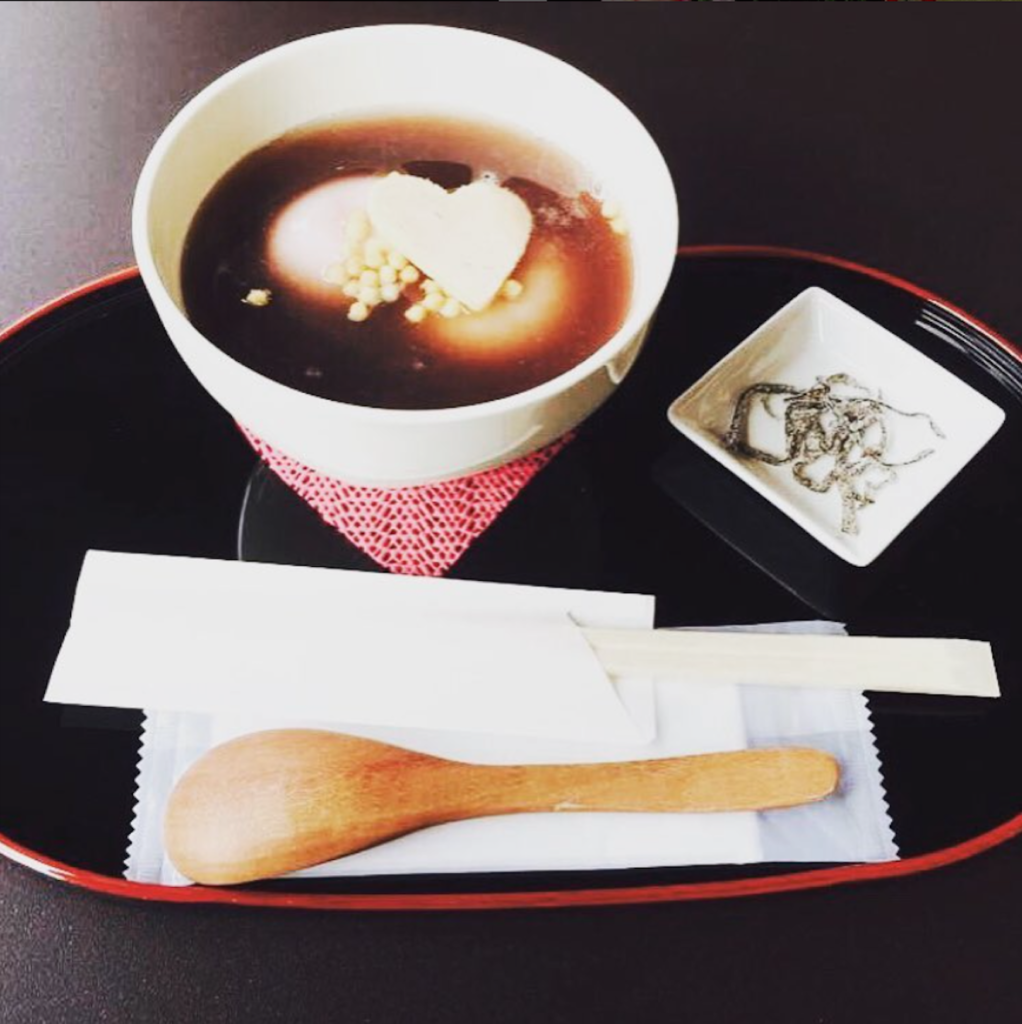
Zenzai is a dessert made with bean paste in a warm soup-like consistency. Naturally, it comes in both coarse and smooth varieties. It’s common to add mochi (rice cakes) or shiratama (rice flour dumplings) to the soup. Both types offer a “Mochi-mochi” chewy texture. Many restaurants also offer shio-konbu (salted kelp) alongside it. Eating something salty after something sweet enhances the sweetness (sweet and salty balance), so a connoisseur’s way of enjoying it is to alternate between zenzai and shio-konbu, or finish off the zenzai with shio-konbu. This photo was taken at a shop near the approach to Izumo Taisha Shrine during a visit. This place is also said to be the birthplace of zenzai. The heart-shaped topping is adorable, and the warm, sweet, and delicious zenzai instantly soothed my travel fatigue. Zenzai is especially recommended during the cold season, as its deliciousness permeates both body and mind.
Beans appear quite frequently in Japanese cuisine. Personally, I find the easiest to eat edamame > bean paste > natto, so I recommend trying them in that order!