
Soba is a traditional Japanese dish, along with sushi and tempura. If I were asked, “Which of these would you choose for lunch with a globally active CEO?” I would undoubtedly choose soba. Raw fish may be a bit too much for some overseas visitors, and many people dislike tempura due to the oily seafood. Soba, on the other hand, is gluten-free, rich in fiber and protein, and a low-GI food, making it a popular choice among health-conscious CEOs.
Soba Ingredients:
Soba is made from buckwheat flour, a binder, and water. Because buckwheat flour has little starch and tends to break when rolled, it is usually mixed with wheat flour, which contains a lot of starch. The name of the soba varies depending on the ratio of buckwheat flour to wheat flour; gluten-free soba, which does not contain wheat, is called “juwari soba” (meaning 100% buckwheat). The next healthiest soba after 100% buckwheat soba is “Nihachi Soba” (meaning 80% buckwheat, 20% wheat flour). Generally, soba noodles not labeled “100% buckwheat soba” or “Nihachi Soba” are often priced lower because they contain a lower percentage of buckwheat and a higher percentage of wheat flour.
Nutritional Values of Soba:
Soba is rich in dietary fiber, which can improve your intestinal environment and keep you feeling full for longer. It’s also a staple food, but its high protein content helps with fatigue recovery and muscle maintenance and growth. One notable feature of soba is its high content of Antioxidant (rutin), a type of polyphenol. Rich in polyphenols with strong antioxidant properties, it strengthens blood vessels, improves blood flow, and has anti-aging effects that prevent skin aging (blemishes and wrinkles). Soba also has a low-GI value, which helps prevent a sudden rise in blood sugar levels after a meal and helps prevent fat accumulation, making it effective for dieting and diabetes prevention. 100% buckwheat soba in particular tends to have a low-GI.
How to Eat Soba:
In Japan, soba is boiled in hot water and generally enjoyed in three different ways.
- Zaru Soba: Boiled soba is served in a colander, a rectangular wooden or bamboo bowl with a rack at the bottom. Noodle soup base is in a separate small bowl called a “soba choko,” and the soba is eaten by dipping a mouthful in the noodle soup base with chopsticks. Condiments such as shredded seaweed are often served on a small plate, and it is common to mix the condiments with the noodle soup base in the soba choko before eating. Both the soba and the noodle soup base are served cold.
- On Soba: Warm soba served in a bowl with hot soup. Some versions are plain soba, while others are topped with ingredients such as shrimp tempura.
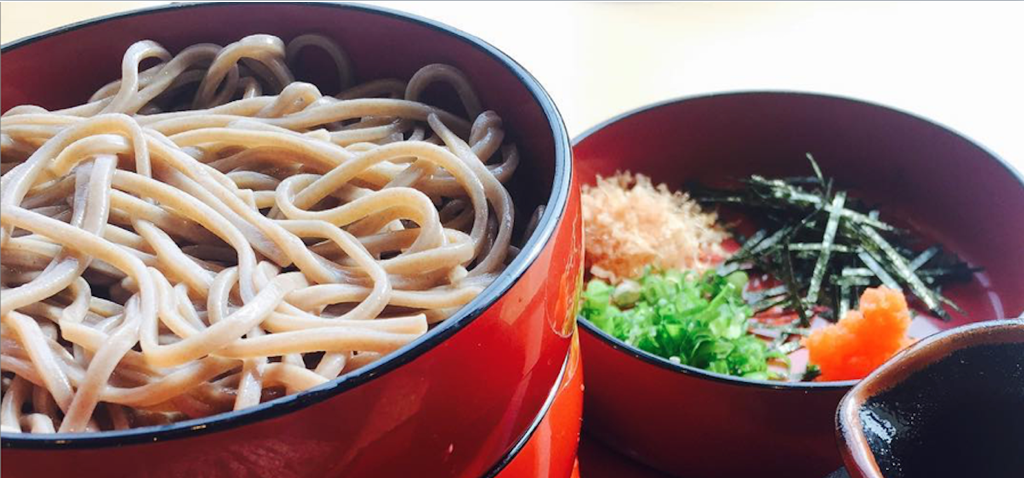
- Bukke Soba: Boiled soba is placed in a bowl, and when eating, soup is poured over it from a separate bowl, allowing the soba to soak in the soup. Condiments such as green onions, seaweed, and grated maple leaves are often served on small plates, and the soba is typically sprinkled on top of the noodles before being topped with the noodle soup base. This photo shows Izumo soba, a type of bukkake soba. Both the noodles and the noodle soup base are served cold.
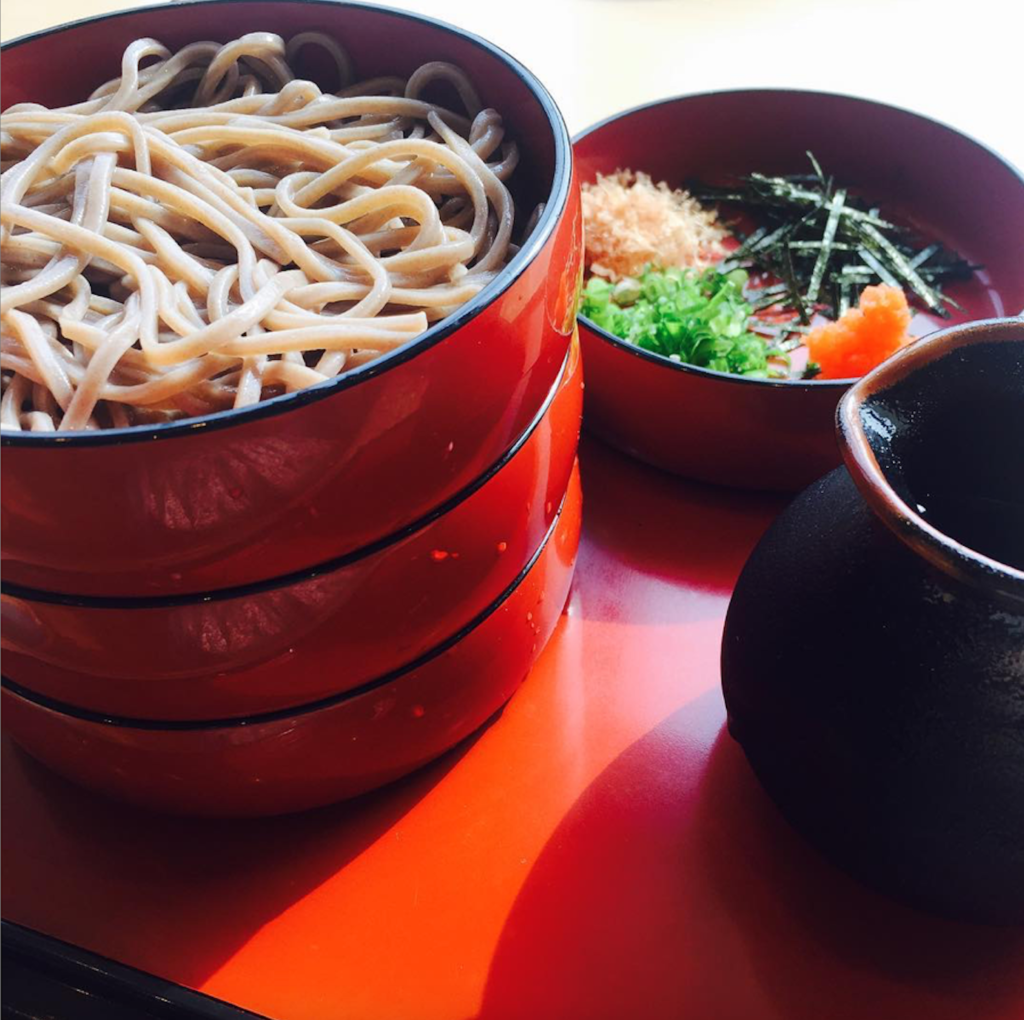
Pro Tip for Longevity: Because rutin is water-soluble, if you choose cold soba (options ① and ③), you can ask the restaurant staff for some soba-boiled water, known as “sobayu.” After finishing the soba, it’s common to pour the sobayu into a soba choko (small cup) in the case of option ①, or into the bowl (the one that the soba came in) (the one that poured the noodle soup base ) and drink it (option ③). This is considered a “stylish final touch” way of eating soba in Japan, as it provides the nutritional benefits of rutin and allows you to enjoy the flavor of the soba.
Why soba is recommended for CEO power lunches:
First, soba is a healthy food with a low-GI value. Because it’s less likely to experience the “lunchtime effect” of feeling sleepy after lunch, soba is ideal for improving performance after lunch. Next, soba is rich in rutin and protein. Muscle training and anti-aging measures are now part of CEO routines. Healthy soba noodles support these routines.
I especially recommend that CEOs always choose cold soba noodles. When eating warm soba noodles, the delicious broth can make you want to drink more, but drinking too much can lead to excessive salt intake and is not recommended. Cold soba noodles, on the other hand, prevent you from drinking too much. Furthermore, when eating warm soba noodles, you inevitably have to “slurp” the noodles, which makes a slurping sound. While this is an appetizing sound for Japanese people, it may be off-putting for people overseas. On the other hand, cold soba noodles can be eaten in bite-sized pieces on a bowl. Cold soba allows for a slurp-free, elegant dining experience.
Japan’s proud healthy food is especially recommended for performance-conscious CEOs.